
$140.00
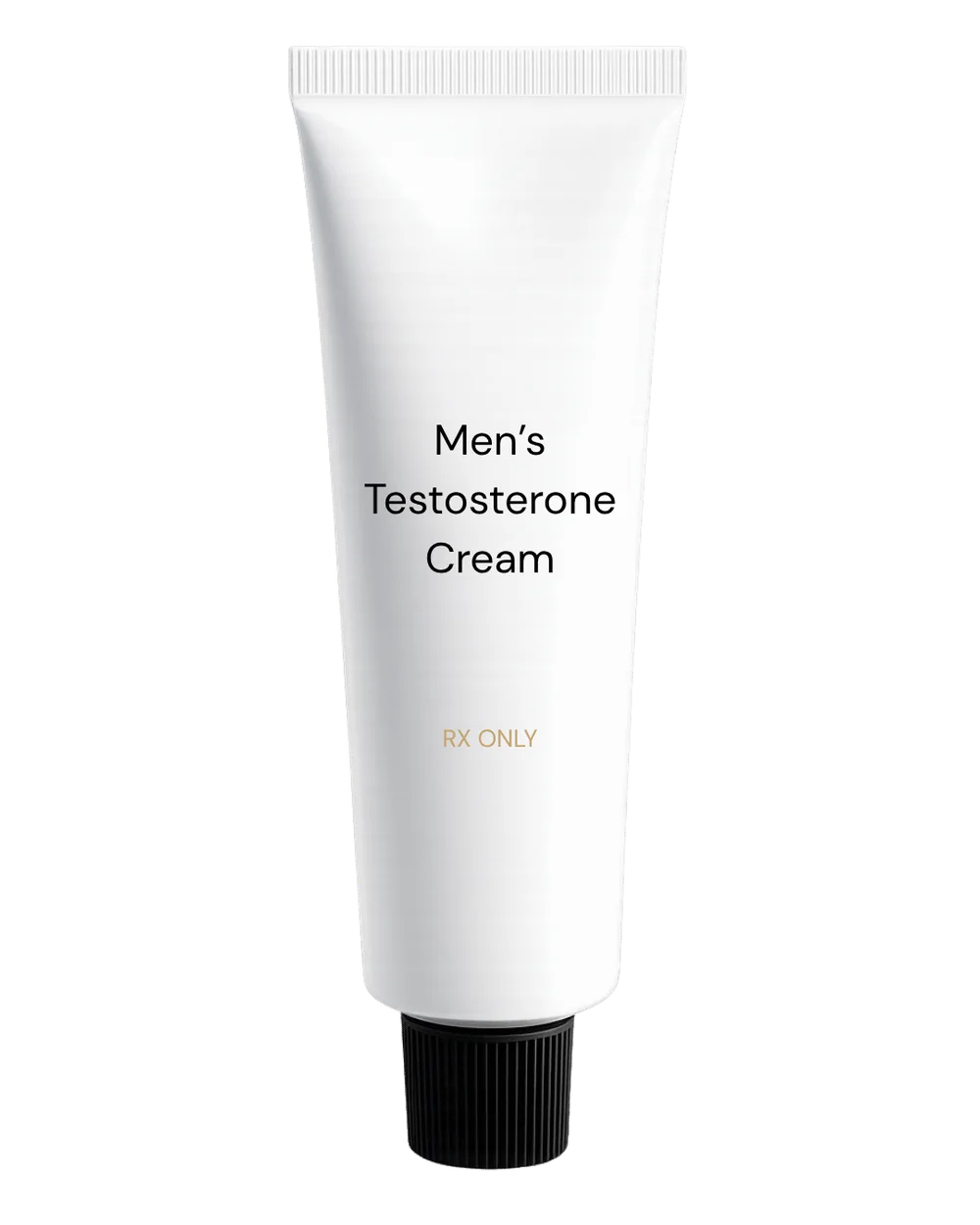
A daily topical testosterone cream for men with documented low testosterone that may help support energy, libido, mood, and body composition. Requires recent lab work. Monthly supply.
Prescription treatments include a short medical intake at checkout. A licensed clinician reviews every order before anything is prescribed or shipped — if it is not approved, you are fully refunded.
Men's testosterone therapy is only prescribed to patients with documented low testosterone or specific hormonal symptoms confirmed by lab work.
To Start: You'll need recent blood work (within the last 6 months). We recommend completing the lab work PRIOR to ordering testosterone. If you don't have recent labs, you can order our Men's TRT Initial Panel for a low cost or complete it independently and upload your results.
The lab test must be drawn between drawn between 7am and 10am and include: CMP, CBC, TSH, Free T4, Testosterone (free and total), Estradiol, LH and FSH, SHBG, DHEA, Sulfate, PSA (free and total), Cortisol serum AM, Prolactin, Ferritin.
To Continue After 90 Days: To monitor your response and ensure your testosterone stays within the appropriate range for men, you will need to complete a lab test within the first 90 days of using testosterone therapy. You can order our Men's TRT Maintenance Panel or complete it independently. The lab test must include the following biomarkers: CMP, CBC, Testosterone (total + free), Estradiol, LH and FSH, SHBG, PSA (free and total)
Annually: After the 90-day check in, the Men's TRT Maintenance Panel will be required annually.
A note on transfer
Topical testosterone can transfer to others through skin contact, and exposure can be harmful to women and children. Apply to clean, dry skin, let the cream fully absorb, and cover the application site with clothing once dry. Wash your hands thoroughly after applying, and avoid skin-to-skin contact at the application site with partners or children until the cream is fully absorbed and the area is covered or washed. Your clinician and care team can answer any questions about safe application.
A note on fertility
Testosterone replacement therapy can suppress the body's own testosterone and sperm production, which can affect fertility. If you're planning to have children in the future, talk with your clinician about whether enclomiphene or hCG might be a better fit for you, or whether adjunct hCG can be used alongside TRT to help preserve fertility.
A note on what TRT is and isn't
TRT is a medical treatment for clinically low testosterone, not a performance enhancer or wellness booster. Testosterone given to men with normal levels does not improve performance and carries real risks. Your clinician will only prescribe TRT if your labs and symptoms support a clinical need.
Important to know
Testosterone is a prescription medication and a controlled substance in the United States, requiring evaluation by a licensed clinician.
TRT is intended for men with documented low testosterone confirmed by lab work. It is not appropriate for men with normal testosterone levels, and it is not a treatment for general fatigue, aging, or athletic performance.
This medication is compounded, meaning it's custom-prepared by a state-licensed pharmacy based on your clinician's prescription, at a concentration 3%. FDA-approved branded topical testosterone products are also available; your clinician can discuss whether a compounded or branded option fits your needs.
TRT is not appropriate for men with active prostate cancer, certain heart conditions, untreated severe sleep apnea, or significantly elevated red blood cell counts. Your clinician will review your full medical history.
TRT can suppress sperm production and affect fertility. Discuss this with your clinician if having children in the future is a priority.
Long-term TRT typically requires ongoing monitoring of testosterone, estradiol, hemoglobin, and prostate markers.
Results vary and are not guaranteed.
Medications sourced from 503A and 503B U.S.-licensed pharmacies.
Lab testing conducted through CLIA-certified laboratories.
Care delivered by board-certified clinicians.
Available in all 50 states and Washington, D.C.